Awwwards
404media is now part of Awwwards. Find our studio profile and work there.
(Announcement)
W.
404media is now part of Awwwards. Find our studio profile and work there.
We launched the new HBE Healthcare website.
We launched the new Property Partners website.
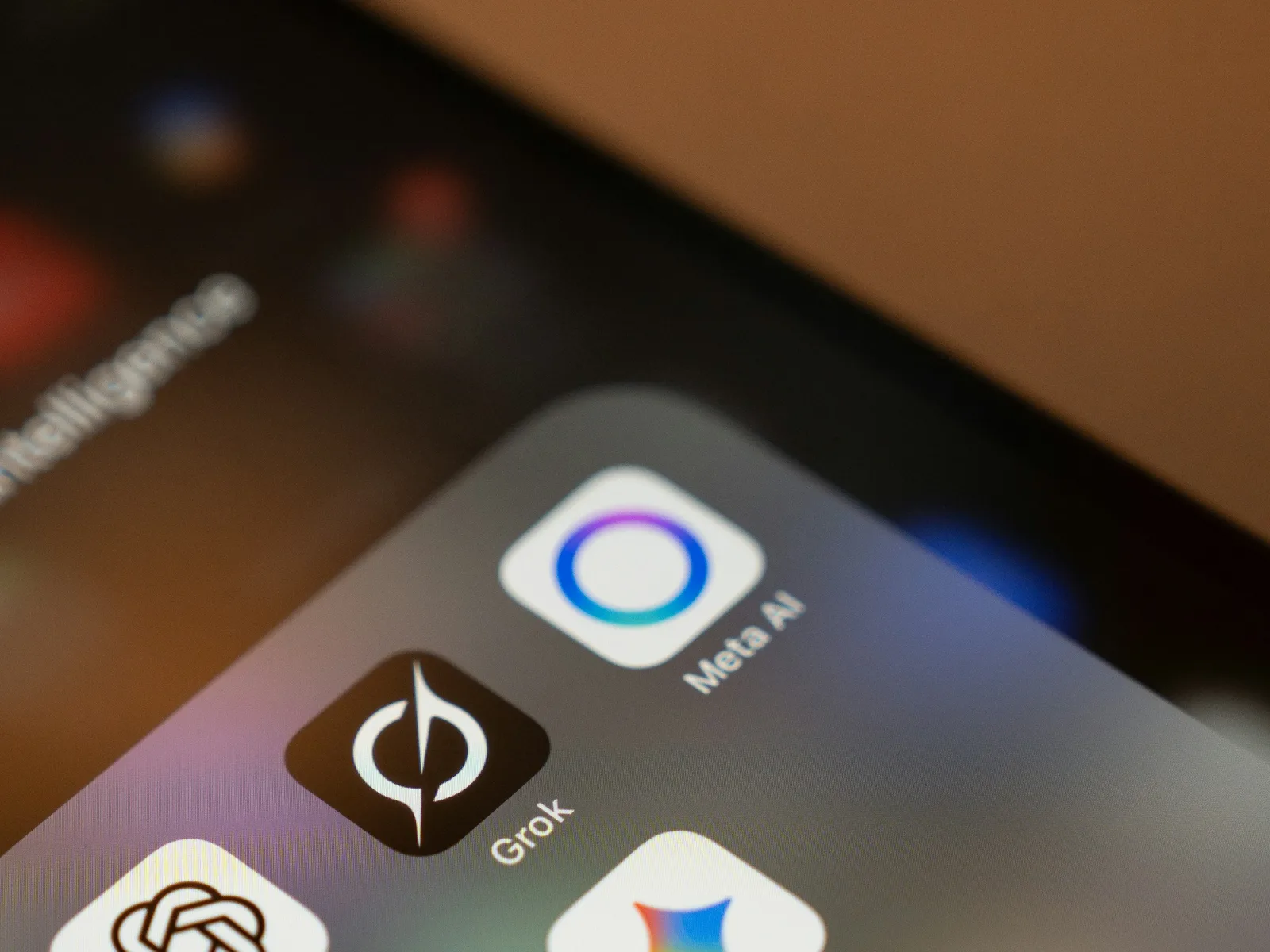
GEO gets your business named in the answers of ChatGPT, Perplexity and Google's AI features. What it is, how it works, what belongs to it and what does not.
 Christoph SpeiserProject lead & sales
Short answer: GEO stands for generative engine optimisation. It covers everything that makes AI systems such as ChatGPT, Perplexity, Gemini or Google's AI Mode name your business as a source or recommendation in their answers. GEO builds on SEO, because most AI answers draw on pages found through a web search. What it adds: content that answers a question in its first sentences, the same company facts everywhere, and confirmation from other websites.
This article explains what GEO is, how AI answers come about and what the work involves. How GEO differs from classic search engine optimisation is covered in our article SEO vs. GEO.
The term comes from a research paper by Princeton University and other institutions, first published in November 2023 and presented at the KDD conference in 2024. The authors tested how texts have to change to be cited more often by AI search engines. Their result: targeted changes, such as adding statistics, quotes and sources, raised visibility in the generated answers by up to 40 %.
Since then, several names have been used for the same thing: AEO (answer engine optimisation), LLMO (large language model optimisation) or simply AI SEO. Google itself calls them terms “you may see used” and says that optimising for generative AI search is still SEO. Not to be confused: geomarketing, which means location-based marketing and has nothing to do with AI answers.
For most business questions, an AI does not answer from memory but searches the web while it answers. Google describes the process in its guide on generative AI search, last updated in July 2026:
That is where GEO starts. Your page has to be in the index, be found for one of the sub-questions and contain a passage that answers it clearly. A page does not have to rank first for the main search term: it is enough to be the best answer to one of the sub-questions.
| AI system | Where the sources come from | Crawler to allow |
|---|---|---|
| Google AI Overviews and AI Mode | Google search index | Googlebot |
| ChatGPT search | Own search plus partner results | OAI-SearchBot |
| Perplexity | Own index | PerplexityBot |
| Microsoft Copilot | Bing index | Bingbot |
How these systems differ in everyday use is shown in our comparison of AI search engines. How Google's own version works is explained in our article on Google AI Mode.
In practice GEO consists of five building blocks. The order matters, because each one builds on the one before.
What a crawler cannot read is never quoted. That means robots.txt, firewall and CDN must let search and AI crawlers through, and the text must be in the HTML. The large AI crawlers do not run JavaScript; content that only loads afterwards stays invisible to them.
Every page and every section starts with one or two sentences that fully answer the question. Then come details: prices or price ranges, timelines, service area, process, references. Google asks for “non-commodity” content: expert views and experience that go beyond common knowledge.
Name, address, services and prices must be the same on your website, your Google Business Profile, WKO Firmen A–Z and in directories. Contradictions make a model unsure whom it should recommend. Our Google Business Profile guide shows how to keep the profile in order.
Reviews with text, press reports, industry directories and lists such as “agencies in Vienna” are exactly the pages AI answers like to draw on for recommendations. How the systems weigh these signals is explained in How AI search decides which businesses to recommend.
Ask the same customer questions every month and note who is named. Since 31 August 2026, Google Search Console has shown impressions in AI Overviews and AI Mode for every website. Visits from chatgpt.com or perplexity.ai show up in your web analytics. How to set this up without expensive tools is explained in Measuring AI visibility.
The audience is already there. According to OpenAI, ChatGPT had 900 million weekly users in February 2026. Google reported at I/O in May 2026 that AI Mode had passed one billion monthly users. At the same time, fewer people click: Pew Research found that people clicked a normal result in 8 % of Google searches with an AI summary, compared with 15 % without.
GEO pays off most where customers compare before they buy: services, B2B, health, real estate, shops. It is less urgent for a business whose customers come almost entirely through personal recommendation, or whose website is not indexed properly yet. In that case the SEO groundwork comes first.
Changes to your own website usually show within a few weeks, once the systems crawl again. Reviews and mentions on other sites build up over two to three months. Because answers vary, judge the trend over several months, not from a single test.
| What drives the effort | Less effort | More effort |
|---|---|---|
| Starting point | Website indexed, fast, text in the HTML | Content loaded by JavaScript, pages blocked |
| Number of services and locations | One service, one location | Many services, several locations |
| Company facts | Consistent everywhere | Old addresses, different names |
| Mentions | Reviews and press already there | Hardly any mentions outside your own site |
That is why we do not quote a flat rate without looking first. After a free check you get a fixed quote, so you know in advance what you get and what it costs.
Our free GEO check shows in about a minute whether ChatGPT names you for your customers' questions. Then we go through the results with you.
GEO (generative engine optimisation) means preparing your website and company facts so that AI systems such as ChatGPT, Perplexity or Google's AI Mode name you as a source or recommendation in their answers.
Not quite. GEO builds on SEO, because AI answers mostly draw on pages from a web search. It adds answer-first passages, consistent facts and mentions on other sites. The details are in our article SEO vs. GEO.
All three describe the same goal: being the answer, or the source of the answer, in AI systems. GEO stands for generative engine optimisation, AEO for answer engine optimisation, LLMO for large language model optimisation.
No. Google says the file neither harms nor helps visibility in Google Search, and no large AI provider has confirmed using it for citations. It does no harm, but other steps matter much more.
Changes to your own website usually show within a few weeks. Reviews and mentions on other sites take two to three months. Because AI answers vary, measure over several months.
We do GEO and SEO together for businesses in Austria and Germany: audit, page rebuild, company facts, mentions and monthly measurement. Start with our free GEO check or get in touch.
More lessons from our projects in Vienna.
SEO & GEO • • 8 min read
Christoph Speiser
SEO & GEO • • 9 min read
Christoph Speiser
SEO & GEO • • 9 min read
Christoph SpeiserTell us about your project. Christoph gets back to you personally.
Christoph Speiser, Project lead & sales